
Case study
STL
identity, website and digital launch
Identity, website and digital launch of the Fundación Seminario Teológico Libre: domain, legal pages, PayPal donations and SEO.
- Role
- Identity, web and digital launch, solo
- Type
- Work for a foundation
- Language
- Spanish
Overview
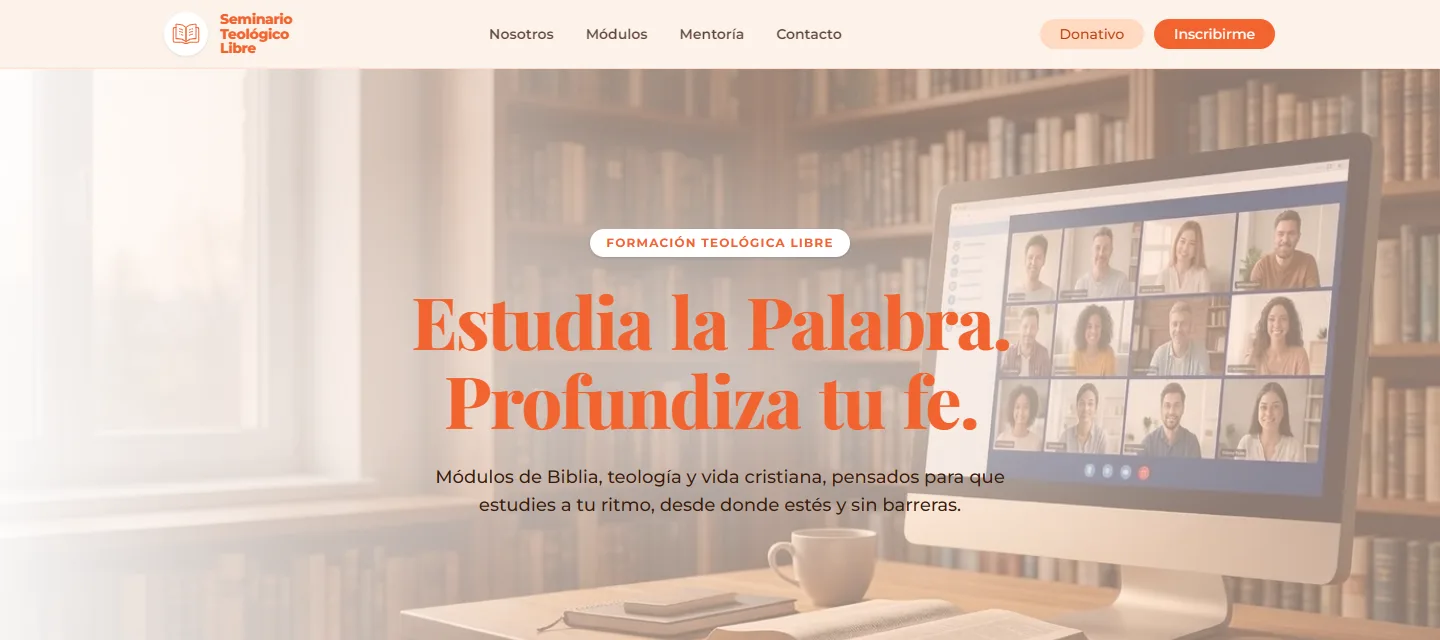
I designed and built from scratch the website of the Fundación Seminario Teológico Libre, a non-profit community that offers free Bible studies over Zoom. The site presents the modules and their teachers, shows when the next class is and leads to enrolling through WhatsApp.
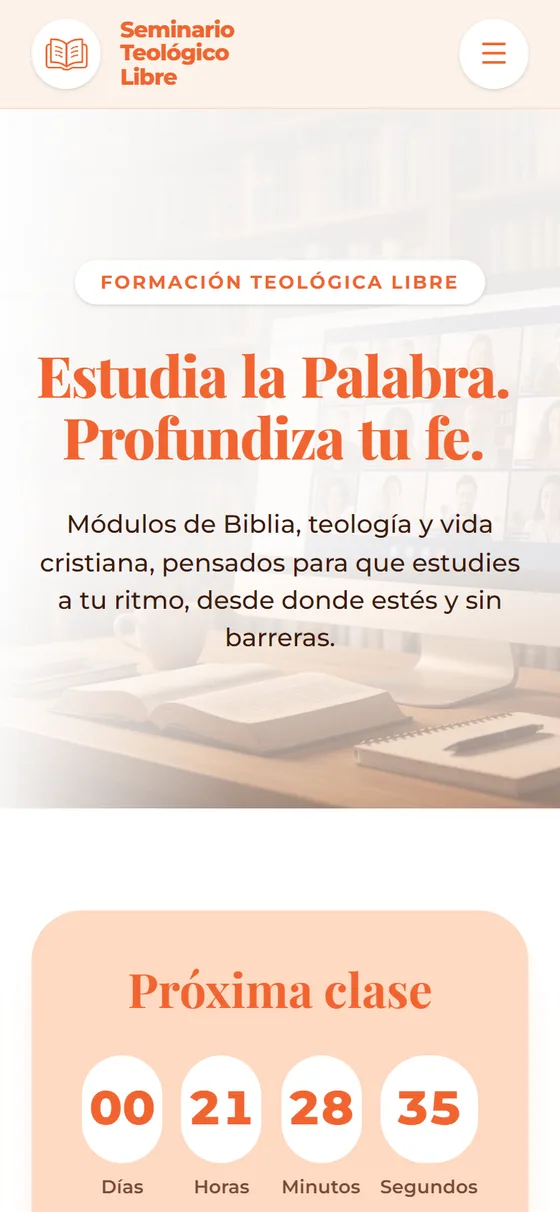
What mattered most to me was the visitor's experience, reusable components, and animations that help without getting in the way.
Present the modules and their teachers, show when the next class is, and make it easy to enroll, donate or get in touch, on a site that can be maintained by changing data files.
A Next.js and React site where modules, schedule and contacts live in data files (modules.js and site.js) and the interface is built from reusable components such as Reveal, VideoCard, VideoModal and Testimonials.

What I cared about most
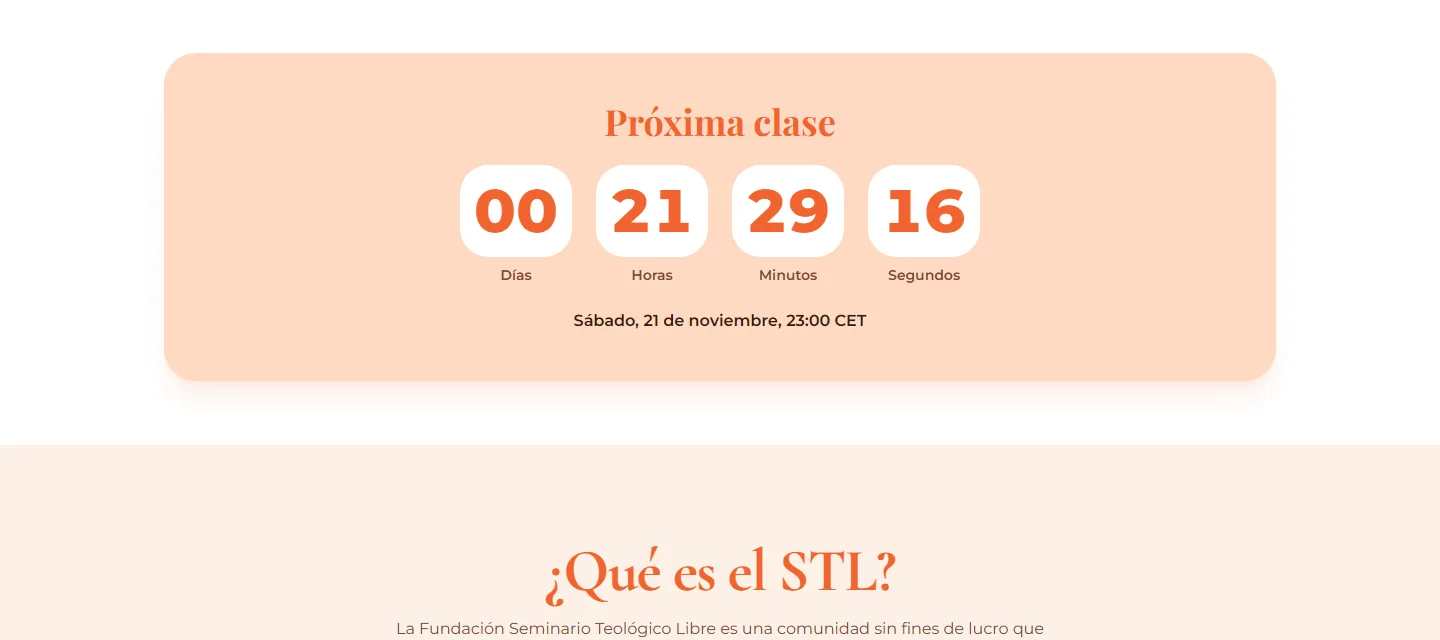
A countdown in your own time
Class is always at the same Chile time. The calculation uses the America/Santiago zone, daylight saving included, and each person sees the date in their own zone. Adding ?tz= to the address lets you test another one.
Videos in a pop-up that jumps from the card
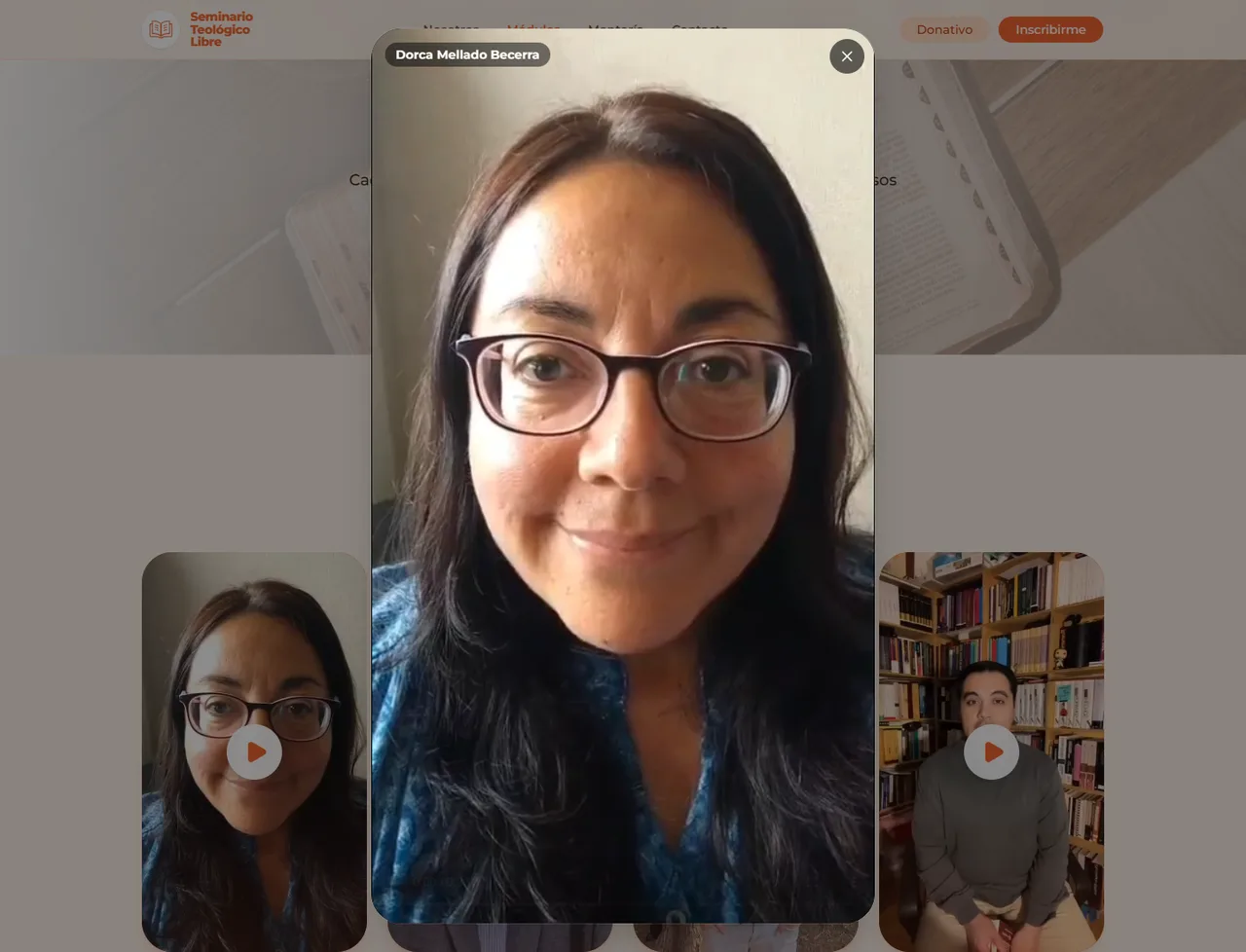
On play, each teacher's video grows from its card to almost the full screen, with a Motion spring. It closes with Escape, the button or on scroll.
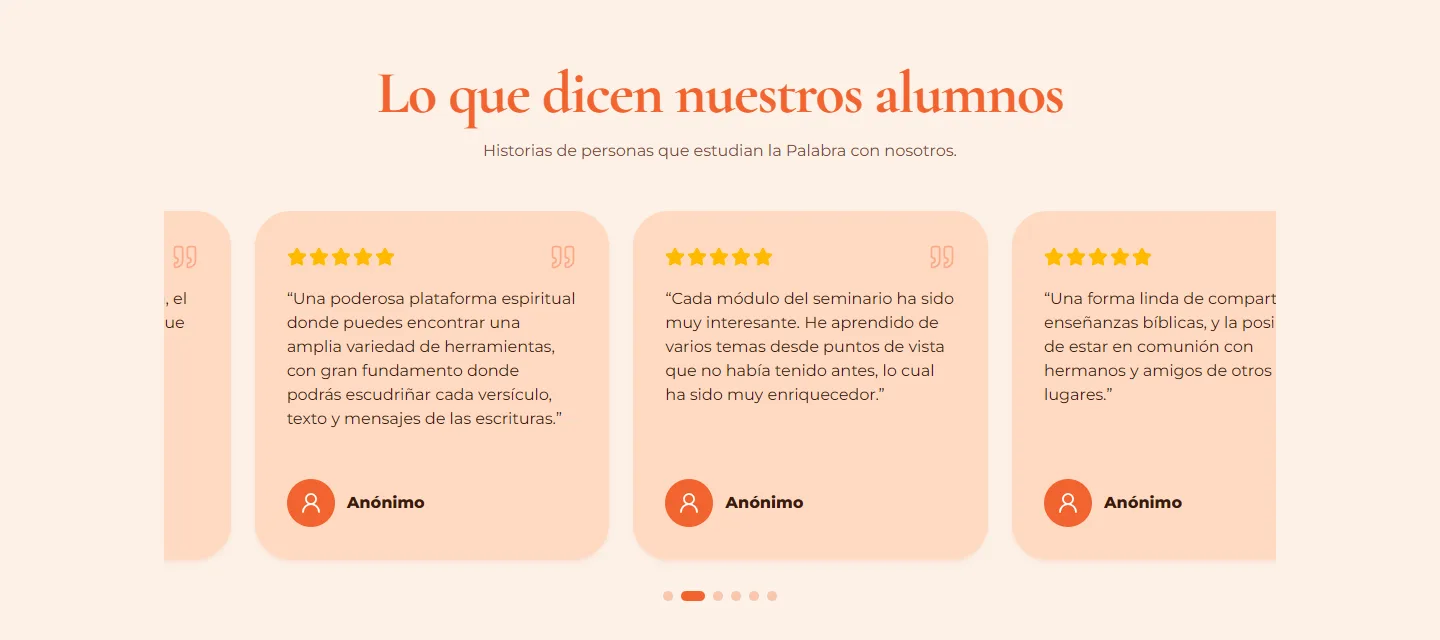
Reviews that move by themselves
The carousel advances slowly in a loop, stops with the mouse, a finger or the keyboard, and can be dragged. I wrote it by hand with requestAnimationFrame.
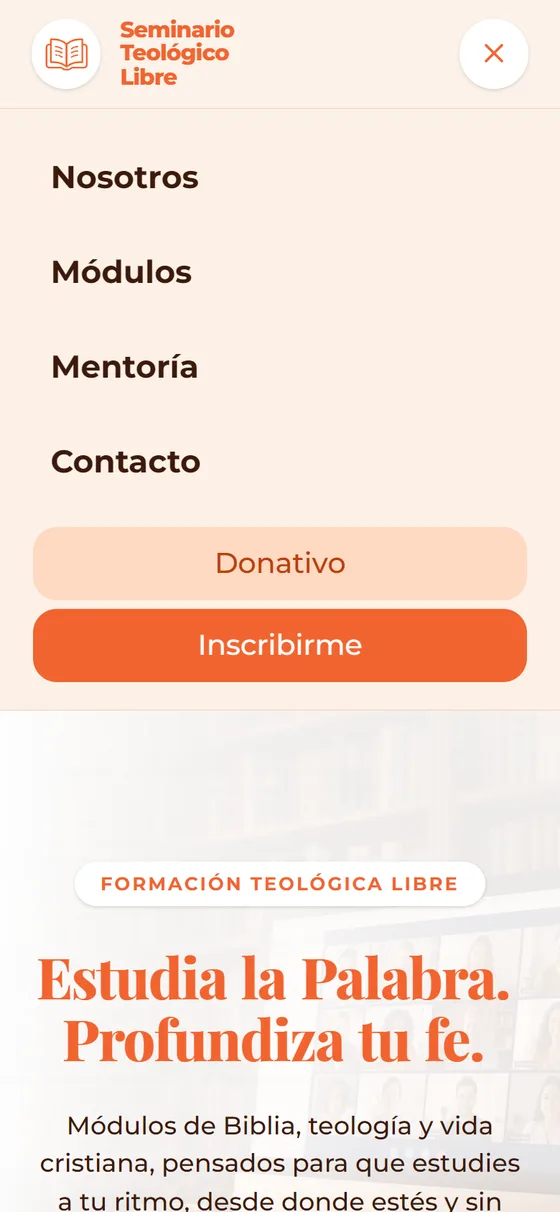
Mobile menu and module filter
The menu unfolds with an animation and closes on navigation. The topic filter moves the cards with transitions instead of jumps.
Animations
- GSAPHero
Title words rise one by one and the background zooms out slowly on load.
- MotionInterface
Scroll reveals, navigation bar, module filter, video pop-up and enlarged photo.
- JavaScriptReviews
A requestAnimationFrame loop moves the carousel; people can stop or drag it.
- CSSDetails
Colour, shadow and scale changes on hover.
User experience
Reduced motion
If the system asks for it, the title and the carousel do not animate.
One video at a time
Playing one pauses the others, also when scrolled away or the tab changes.
Easy-to-close pop-up
Closes with Escape, the button, on scroll or when the tab is hidden.
A carousel that listens
It stops on hover, touch or focus, and resumes by itself.
Decisions
- 1
Data outside the components
Modules, schedule and contacts live in data files. Changing the schedule is editing one line. The cost: there is no editing panel, so every change goes through the code and a deployment.
- 2
A custom carousel
I wrote the reviews carousel instead of using a library, to control when it stops and how it drags. The cost: Testimonials.jsx has 161 lines to maintain.
- 3
Videos hosted on the site
The five videos sit in the public folder, so the security policy only allows content from the site itself. The cost: the repository stores video files.
- 4
Security headers
I added a content security policy and other headers. Because Next injects inline scripts and styles on a static site, I had to allow unsafe-inline, which is a weaker protection than ideal.
Outcome
0
commits in a month
0
pages
0
custom components
0
published modules
Figures taken from the repository and the site data, as of November 2026.
I designed and built the site on my own. The module texts are taken from the foundation's programs and materials.
Takeaways
With data kept outside the components, changing a schedule or adding a module means editing one file.
An animation needs a job: guiding the eye, confirming a gesture or avoiding an abrupt jump.
Respecting reduced motion and pausing what is off screen is part of the design, not an extra.
Next: publish the missing modules (1, 2, 3, 4 and 9) and add automated tests, which the project does not have today.
Visit live site